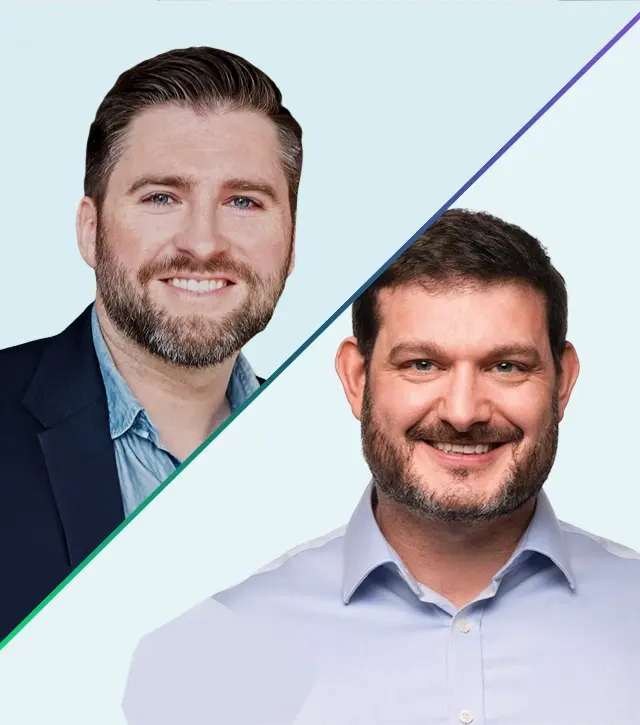
On Wednesday 4th March, Nexian hosted the second session of the Legal Modern Workplace webinar series. Matt Newton was joined by Oliver Tromp (Actionstep) and Philip Nairn (Exizent) to explore what a well-designed law firm technology ecosystem looks like, and how firms can move from a fragmented tech stack to a joined-up strategy. Here are the key takeaways:
- Most law firms have accumulated tech over time rather than built a coherent strategy. More than half are still on legacy, on-premise systems with poor or no integration between tools.
- The practice and case management system (PCMS) should sit at the heart of the ecosystem as the single source of truth, with specialist tools integrating around it rather than duplicating data across separate platforms.
- Legacy systems struggle to support a modern ecosystem approach. The move to cloud-native, browser-based platforms with open APIs is what unlocks genuine integration, agility, and a better user experience.
- Clean, complete data sitting in a central PCMS is a prerequisite for AI adoption. Firms with messy, duplicated, or siloed data are already finding that AI tools underdeliver as a result.
- When choosing new technology, firms should think beyond what solves today's problems and ask whether a vendor's roadmap will still serve them in two or three years' time.
- Now is a unique window of opportunity. AI has not yet fully disrupted the legal sector, but the firms building the right foundations today will be far better placed to adapt when it does.
On Wednesday, 11th February, we hosted the first session in our Legal Modern Workplace webinar series, tackling one of the most pressing questions facing law firm leaders today: is the technology underpinning your firm actually working for you?
On Wednesday 4th March, we hosted the second session in our Legal Modern Workplace webinar series, focusing on one of the most practical challenges law firms face: how do you build a technology ecosystem that actually hangs together?
We were joined by two guests who spend their working lives at the sharp end of this challenge. Oliver Tromp is Regional Vice President UK at Actionstep, the cloud-based practice and case management platform that Nexian implements as the UK's leading Actionstep partner. Philip Nairn is Co-Managing Director of Exizent, a specialist cloud-based platform designed for probate professionals that integrates with practice management systems to streamline estate administration.
Together, we unpacked the reality of how most law firms have built their tech stacks, what a better approach looks like, and the practical steps firms can take to start moving in the right direction.
The reality: most firms have a tech stack, not a tech strategy
The session opened with an honest assessment of where most law firms actually are today. Oliver set the scene, and the picture was familiar to anyone who works in the sector.
"Every firm we speak to, literally every firm, has accumulated tech over time. A lot of them feel like they don't have a comprehensive strategy for their tech. It's just kind of messy."
Oliver Tromp, Regional Vice President UK, Actionstep
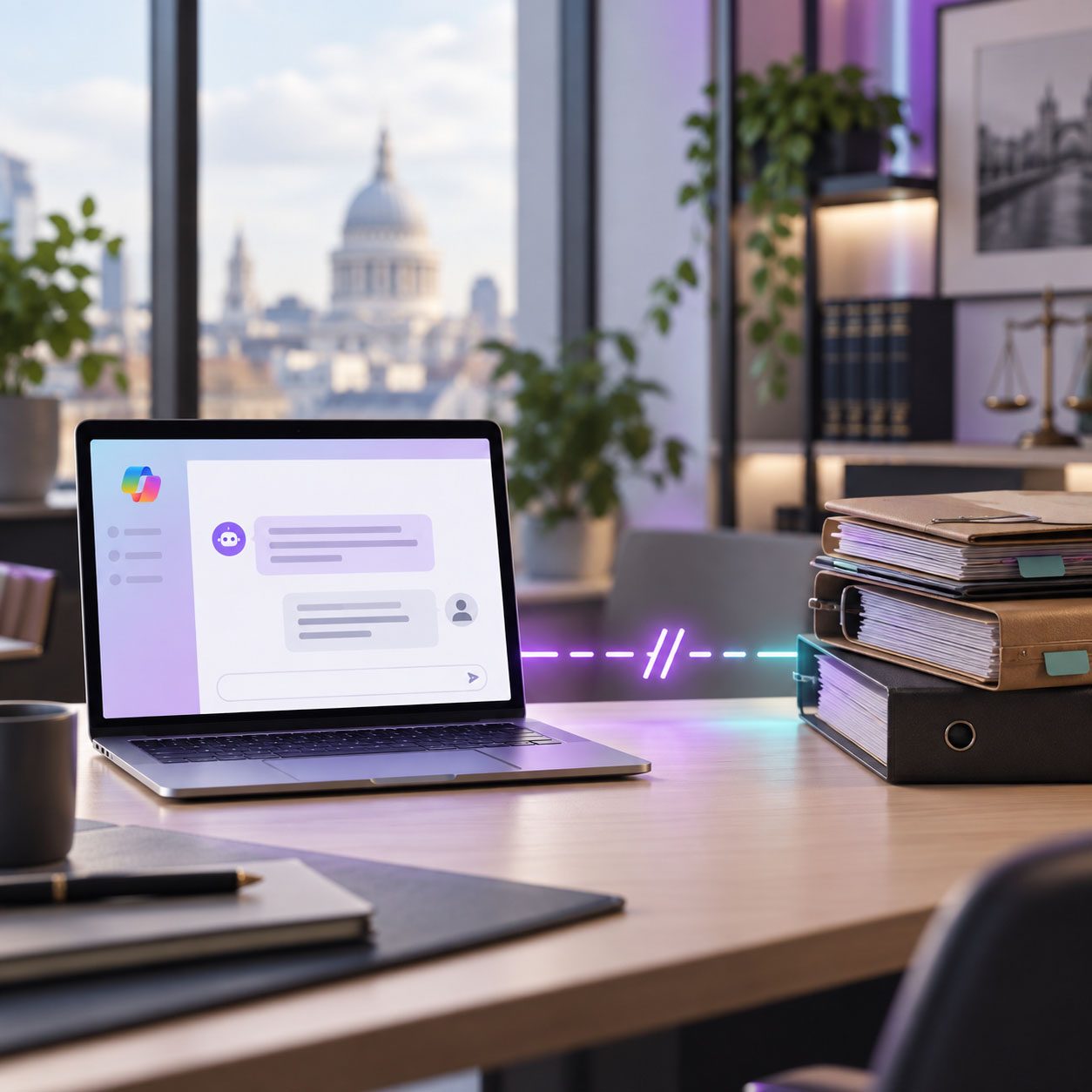
More than half of UK law firms are still on legacy, on-premise systems. For those firms, the tools they have adopted over the years often do not integrate with each other, leading to rekeying of data, manual effort, and unnecessary duplication. In some cases, firms do not even realise they are paying for tools that overlap in functionality.
Philip echoed this from the specialist tool perspective, noting that even in a practice area like probate, where the workflow follows a fairly defined path, the variation in how firms have approached their technology is striking. Some rely on a patchwork of legacy systems and spreadsheets. Others have tried to build a pseudo-solution by stitching tools together, only to find that solving one problem creates two or three others.
The impact of this fragmentation shows up on both sides of the relationship. For clients, it means slower service and a less seamless experience at what is often a difficult time. For the firm, the risks are data errors from rekeying, compliance exposure from data sitting across multiple platforms, and a commercial disadvantage against firms that are operating more efficiently.
What a well-designed ecosystem actually looks like
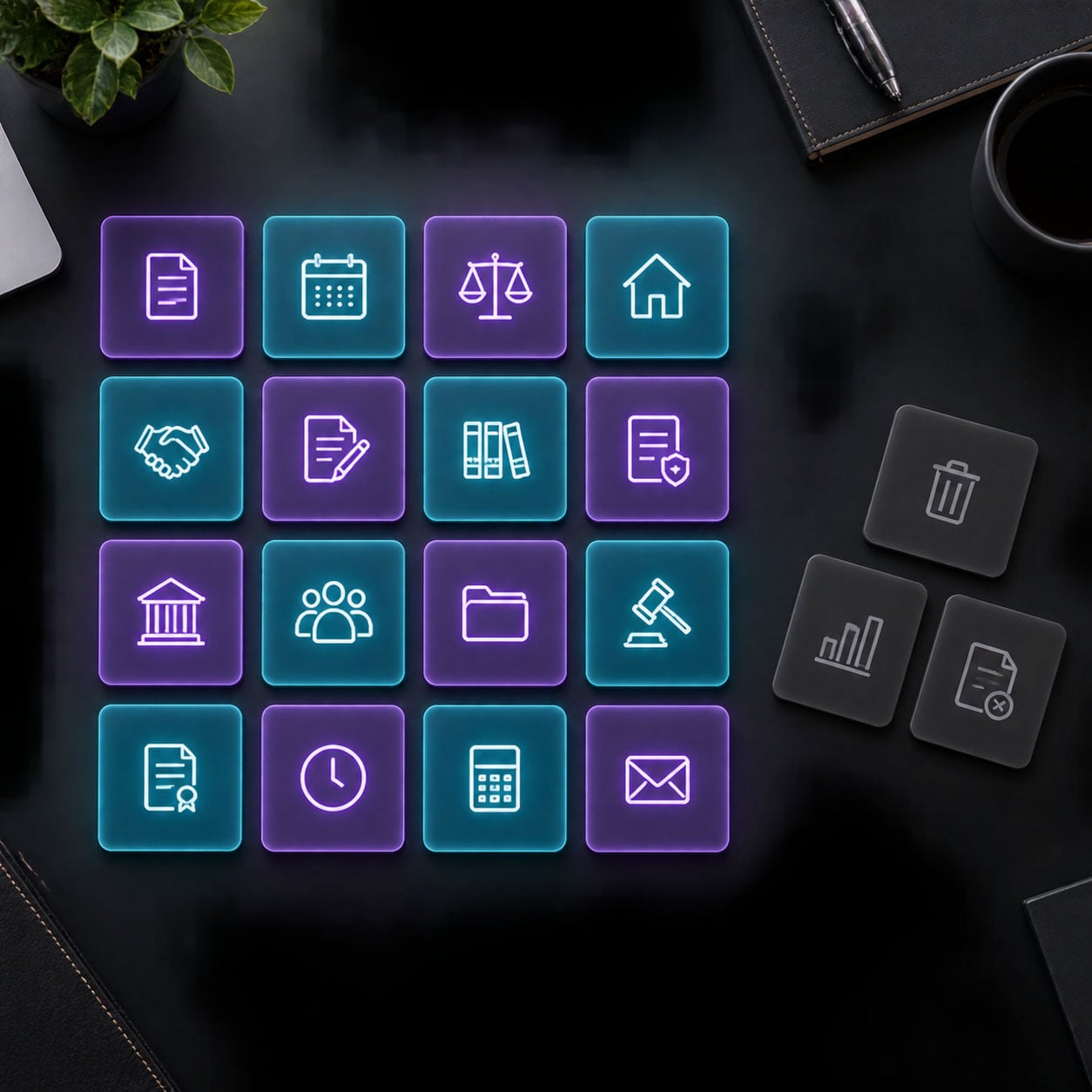
The session was clear on what a better model looks like. The practice and case management system sits at the centre of the ecosystem as the single source of truth. Everything else, document management, specialist practice area tools, AML, compliance, AI, connects around it.
Oliver described this as the "extensibility" of a modern PCMS: the ability for firms to plug in the best available tools for each specific need, rather than being forced to use inferior built-in functionality or wait for their core system to develop it.
"There's probably a reason why no PCMS supplier has ever truly nailed probate. It's hard and complex, and that's why something like Exizent exists. It's a specialist tool that does this better than probably anyone else. We love good tech, but we're realistic. We know we can't be all things to all people."
Oliver Tromp, Regional Vice President UK, Actionstep
This philosophy of recognising what belongs at the core and what is better served by specialist tools is the foundation of a sensible ecosystem strategy. It also means that the PCMS provider's approach to integration matters enormously. Open APIs, a genuine partnership model, and a commitment to making it easy for other tools to connect are not optional extras: they are what determines whether a firm can actually build the ecosystem they need.
Philip illustrated how this plays out in practice with the Exizent and Actionstep integration. Rather than firms having to rekey client data from their PCMS into a specialist probate platform, the integration allows users to pull the relevant matters across directly, with control over what gets imported and when. The result is less friction, less risk, and faster progress on files.
Why legacy systems make this so hard
A significant part of the session was spent on why legacy systems are such a barrier to building a modern ecosystem, and why this is not simply a question of will or investment.
Legacy PCMS platforms were built to do as much as possible in-house. In many cases, the organisations that own them have acquired other tools across the ecosystem, creating a financial incentive to keep customers within their own product suite rather than integrating freely with competitors. On top of that, the technical infrastructure simply was not designed with open API integration in mind.
The result is that integrations with legacy systems tend to be expensive to build, time-consuming to maintain, and prone to breaking whenever the underlying system is updated. Philip described this from direct experience, noting that while Exizent has built integrations with some legacy systems, it is typically only viable for larger firms with bigger budgets, precisely when the benefits would be just as valuable to smaller practices.
Cloud-native systems change this equation entirely. Because the integration is managed through a stable, well-documented API and both platforms are being actively developed, the ongoing cost of maintaining the connection is dramatically lower. What previously required a significant custom project becomes something that every client can access as a standard feature.
"It doesn't cost us anything to roll it out. Every client has access to it. We manage it in conjunction with Actionstep. That shift to cloud-based infrastructure has been a brilliant change for us. It's played into exactly what we've always wanted."
Philip Nairn, Co-Managing Director, Exizent
Clean data is the foundation for everything, including AI
One of the most important threads running through the session was data. Having a single, well-structured source of truth in the PCMS is not just good practice: it is increasingly the foundation on which everything else depends.
Oliver pointed to the number of firms currently attempting to adopt AI tools and finding that they underdeliver. In many cases, the reason is not the AI itself but the state of the data it is trying to work with. Duplicated contacts, inconsistently structured records, and data spread across multiple disconnected systems all limit what AI can do.
"Data has to be in a certain format, accessible but secure. If data is not easily and automatically going into the PCMS, your data is incomplete, and that can introduce all kinds of challenges and risks."
Oliver Tromp, Regional Vice President UK, Actionstep
For firms migrating to a new platform, this is also a genuine opportunity. Oliver noted that many firms moving to Actionstep initially plan to bring across all of their legacy data, then realise during the process that a significant proportion of it is duplicated, outdated, or poorly structured. A migration is a chance to reset, start with clean foundations, and make the firm genuinely AI-ready from day one.
Choosing the right tools: what firms should be asking
Both Oliver and Philip offered practical guidance for firms that are evaluating new technology, whether that is a new PCMS, a specialist tool, or both.
Philip's advice was direct: speak to the vendors and speak to independent partners who work across the market. Understanding whether a tool solves today's problem is necessary but not sufficient. The more important question is whether the vendor's direction of travel will still serve the firm's needs in two or three years. Any vendor who claims to know their five-year roadmap in detail is probably overstating it, but there should be a clear and credible sense of where they are heading.
"Firms that can't be agile and adapt will struggle. That's just a fact. There's a unique window of time right now where firms can choose to give themselves more agility and more flexibility, before these changes come."
Oliver Tromp, Regional Vice President UK, Actionstep
COVID offered an earlier lesson that many firms are still recovering from. Firms that were not set up for remote working had to make rushed, expensive decisions under pressure, and some are still operating on the makeshift infrastructure that resulted. The pace of AI-driven change may not be as sudden, but the direction is clear.
The consistent message from both guests, and one that sits at the heart of the Legal Modern Workplace series, is that this is about creating the conditions for success. It is not about adopting every new tool as it emerges. It is about building a foundation that gives the firm the choice and agility to move when it needs to, without being held back by a fragmented or inflexible tech stack.
Want to explore this further?
This session was the second in our seven-part Legal Modern Workplace series. The next episode builds on these foundations, exploring what moving away from Citrix and virtual desktop to a Microsoft 365-centred environment looks like in practice, with real-world experience from a law firm that has already made that transition.
If you would like to go deeper on the themes from this session, our Legal Modern Workplace white paper sets out a framework for building a technology strategy that genuinely connects, covering practice management, Microsoft 365, AI, data, and more.
Download the
Whitepaper
nexian.co.uk/legal-modern-workplace-whitepaper
Or get in touch with the team if you would like to talk through where your firm is on its technology journey.